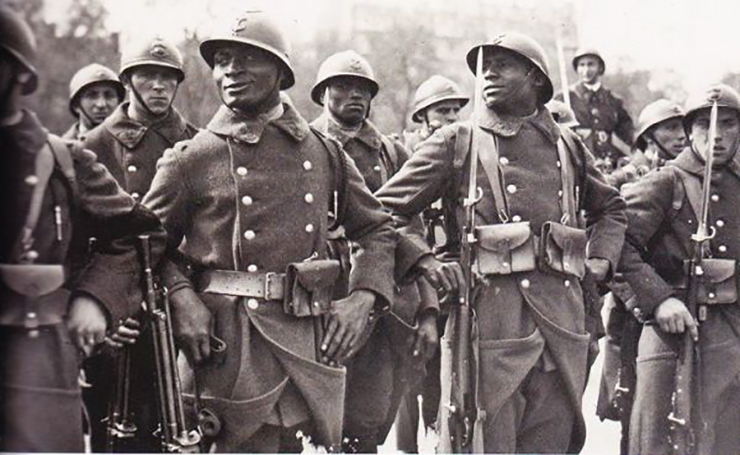
THE PLIGHT OF COLONIAL SOLDIERS IN WWII:
Imagine risking your life in a war not defending your homeland, but fighting for a foreign country, crawling through dense jungle, bombs and grenades exploding all around you, seeing those closest to you killed right in front of your eyes. Now imagine that this foreign country isn’t just any other country, but one that actually colonized your homeland. This is exactly what colonial soldiers had to go through in World War II, and what’s even worse, is that due to their skin color, they were not respected and were paid much less than their white counterparts. However, thanks to recent research, the question of reparations for these forgotten soldiers is now gaining deserved attention.
THE REVEALING DOCUMENT
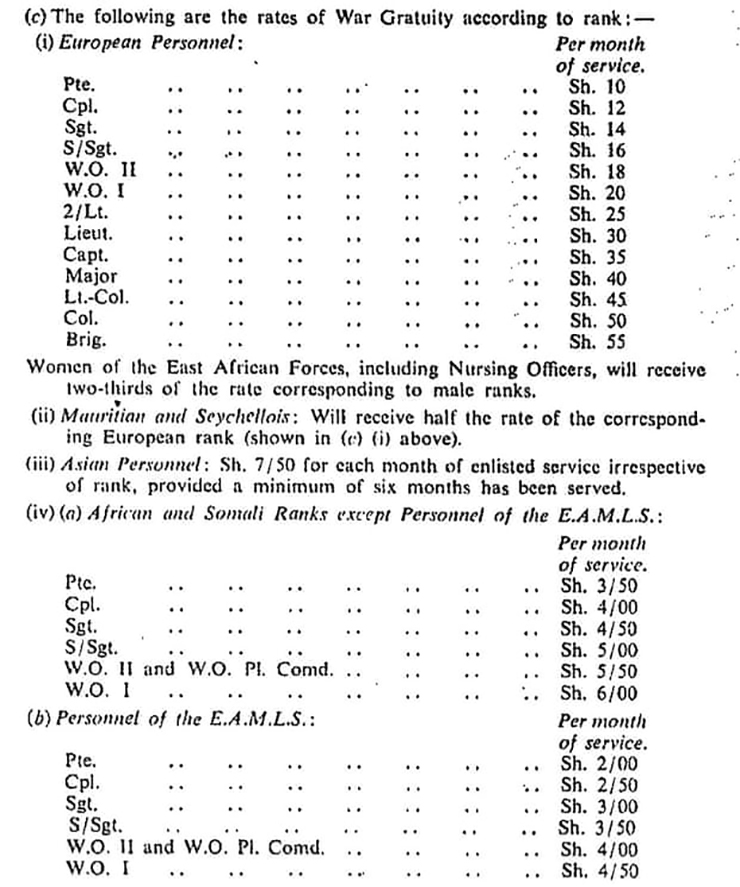
In 2019, documentary filmmakers from Al Jazeera found a new document in the British National Archives showing the extent of inequality soldiers from British colonies faced. It revealed that during World War II, African colonial soldiers, (coming from countries like Nigeria, Kenya and more) were paid nearly three times less than white British soldiers. This document shows how the government systematically discriminated against African soldiers, paying white personnel far more than their black counterparts.
EUSEBIO MBUIKI’S TESTIMONY
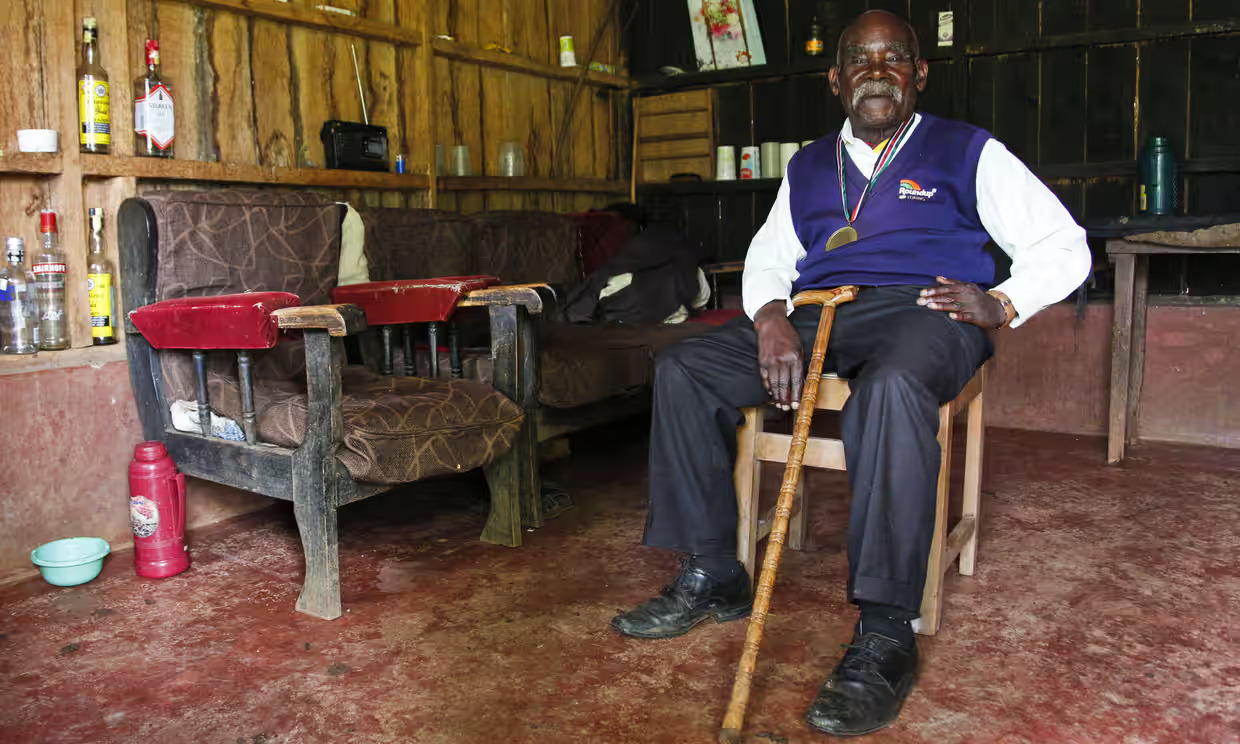
Following the discovery of this document, The Guardian interviewed a 100 year old former Kenyan soldier named Eusebio Mbuiki, who spoke about how colonial soldiers were treated as “boys” who did not know what they were fighting for. Mbuiki was shipped off to Burma in 1944 to fight the Japanese Imperial Army. He talked about poor conditions, such as easily contracting disease and death everywhere. “We started fighting the Japanese straight away,” said Mbiuki. “While we were looking for each other there would be gunfire. Then we would run towards it. It was really rough.” When he returned home to Kenya, he was not treated like someone who had just fought bravely for the Army. He received a service payment called a war gratuity, but since he was a black man, he earned less than his fellow white soldiers. A white soldier who was in his same rank could earn 10 shillings for each month fought, but Mbuiki only earned 3 and a half. In the interview, which was conducted in a run-down shack where he lives by himself in Kenya, Mbiuki stated that: “They should have known how much we had helped them…We were abandoned, just like that.” This illustrates the impact colonial soldiers had and the respect they earned, and deserved, but did not receive.
THE LINGERING INJUSTICE AND ADVOCACY FOR REPARATIONS
Even now in the 21st century, nearly 70 years after the end of the Second World War, colonial soldiers have still not received sufficient respect or fair pay for their sacrifices. The feeling of betrayal of this inequity in Mbiuki and other senior African veterans like him has not diminished in the decades since his military service. However, journalists and even prominent military leaders are now advocating for reparations. For example, former chief of the UK armed forces, General Lord Richards, condemned the neglect of these soldiers following their service in the British army. “We’re talking about people who fought for us in the most horrendous circumstances,” “Surely if Britain and the British people mean anything, it’s about generosity of spirit and I feel our political leadership sometimes doesn’t remember that.” Richards added: “We should be ashamed that veterans who fought for our country are living in that poverty … It’s not too late. We can still make amends.”
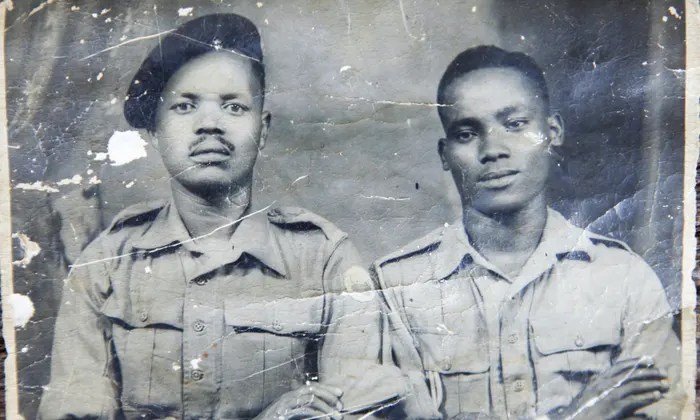
Eusebio Mbiuki (left) in a photo taken in the 1940s. Photograph: Jack Losh
REPARATIONS IN FRANCE
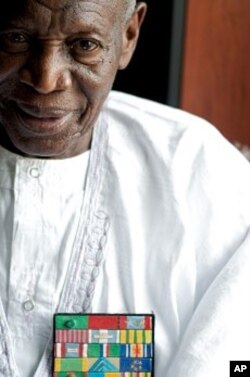
There is some precedent for reparations, specifically in France, as former Senegalese soldiers such as Alioune Kamara have advocated for increased pensions for Africans who fought for the French during World War II. Kamara told VOA that following the independence of Senegal in 1960, their pensions were frozen, and until the past few decades, they had been earning one tenth of what their white comrades were earning. On Bastille Day in 2010, former French president Nicolas Sarkozy announced that he would end all unequal pensions. The promise of equity in pension payment is especially important to injured colonial veterans, such as Diadie Ba, who was shot in the leg while he fought against the Germans for the liberation of France.
A CALL FOR ACTION
It is good to see that former colonial powers such as France are now giving their colonial soldiers some of their overdue respect. However, countries like Britain still need to give their colonial soldiers the respect– and money– they have earned.
SOURCES:
https://www.theguardian.com/world/2019/feb/13/african-british-army-paid-less-than-white-soldiers
https://www.voanews.com/a/senegalese-soldiers-speak-of-fighting-for-france-100767264/123943.html
https://www.theguardian.com/world/2019/feb/13/we-were-abandoned-the-kenyan-soldier-forgotten-by-britain
https://www.historyhit.com/how-were-british-and-french-colonial-african-forces-treated/

 WORLD WAR II'S UNSUNG AFRICAN HEROES
Leave a comment