Demobilization
Despite their crucial contributions to the war, African colonial soldiers returned home and faced systemic discrimination, receiving much less compensation for their efforts than their European counterparts. This reflected the racial inequalities of colonial rule. Many African soldiers returned home expecting fair treatment, pensions, or land grants. Instead, they found unemployment and minimal support.
The refusal to pay African veterans their promised wartime wages was not only an administrative failure, but also an example of racial inequalities embedded in colonial military structures. Demobilization typically involved a small war gratuity or severance, but records reveal that African veterans received far less than their white counterparts. For example, there is evidence that African soldiers were paid nearly three times less than white British soldiers. Records show significant pay disparities and broken promises to African veterans, highlighting enduring colonial injustices. African veterans sometimes received demobilization payouts up to 80% lower than those given to white soldiers. Soldiers returning to places such as Kenya, Nigeria, and Senegal often did not receive their promised benefits, and some sources say their pensions were only a fraction of what Europeans of the same rank were paid.[i] When African colonial soldiers returned home to their countries of Nigeria and Kenya, their war gratuity was nearly three times less than white British soldiers, since they were black. In 2019, Losh revealed a document from the British National Archives confirming that inequality was a part of the colonial government’s official policy in paying the African soldiers the least compared to others.[ii] This mistreatment after the war was not incidental but part of an official colonial policy.
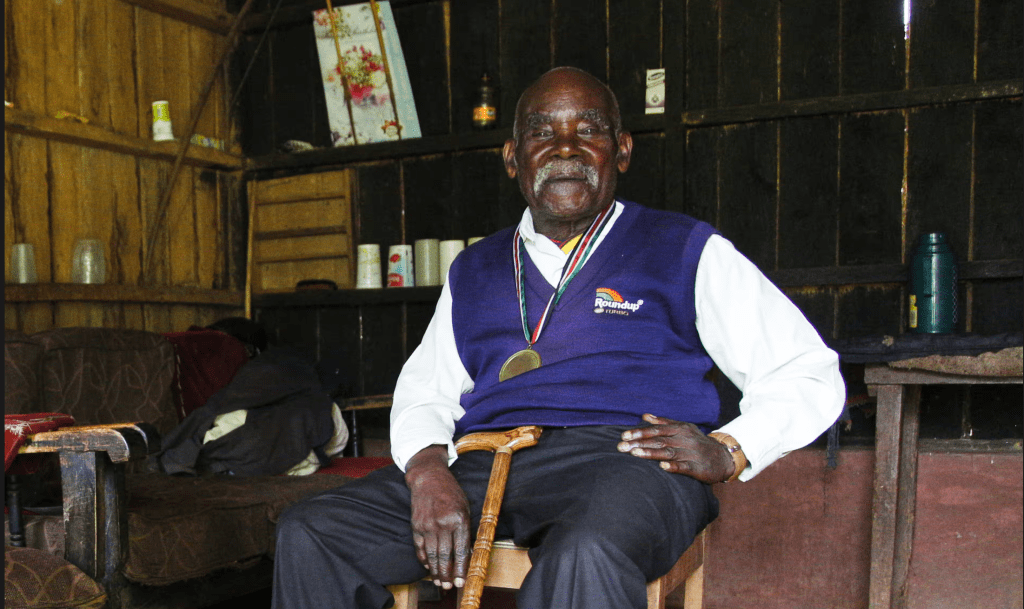
When Private Mbiuki, who fought for the British in Burma, finally returned to Kenya, he discovered that even though all discharged soldiers were entitled to a war gratuity, British policy stated that someone of his ethnic background and colonial status should be paid less than a white soldier. As a private, he could earn only three and a half shillings for each month he had served. In contrast, a white soldier with the same rank would get 10 shillings—nearly three times more. “They should have known how much we had helped them,” says Mbiuki. “We were abandoned, just like that.”[iii] “I only get 5,000 Congolese francs (around five euros) per month in war pension. This is unworthy of someone who has fought for the interests of Belgium,” laments veteran Albert Kunyuku, a former Congolese corporal in the Belgian colonial army.[iv] The racial pay gap and inadequate post-war support reflected the colonial government’s broader disregard for African veterans.
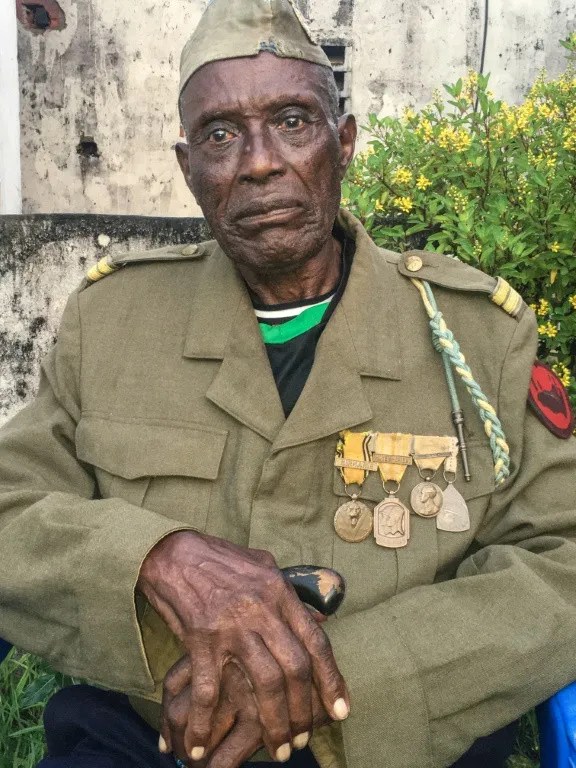
Albert Kunyuku Ngoma, pictured in 2020
Image Source: https://www.ibtimes.co.uk/belgian-king-decorates-last-congolese-wwii-vet-1700449
Following the war, the colonial government also failed to fulfill its promises to Nigerian ex-servicemen. Many veterans received inadequate pensions or no employment assistance, leaving them to face widespread unemployment. The skills they gained during their service were often irrelevant to civilian life, further compounding their difficulties. By 1947, there were over 43,533 unemployed Nigerian ex-servicemen out of a total of 100,099 who had served during the war. This means that nearly 43% of Nigerian ex-servicemen were still unemployed by 1947, two years after the war ended. “The brave new world they had fought for, had very easily faded into a rotten world of unemployment and frustration” shared Mokwugo Okoye.[v]
In late 1944, the French military forced African soldiers returning from France and from German prisoner of war camps to return their American-issued uniforms before being sent back to their communities in French West Africa. This policy left the soldiers poorly dressed and humiliated as they reintegrated into civilian life. These soldiers, many of whom had fought for France or endured imprisonment during the war, were denied the dignity of keeping their uniforms, which symbolized their service and sacrifices. In contrast, white French soldiers were allowed to retain their uniforms. This highlights the racial inequality within the French colonial military system.[vi]
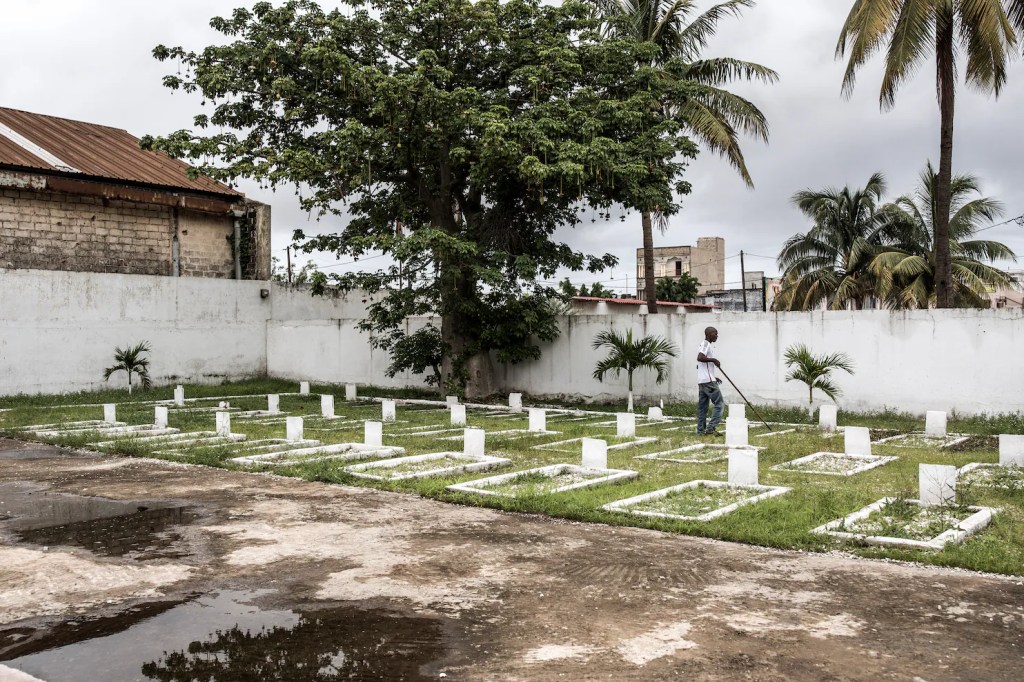
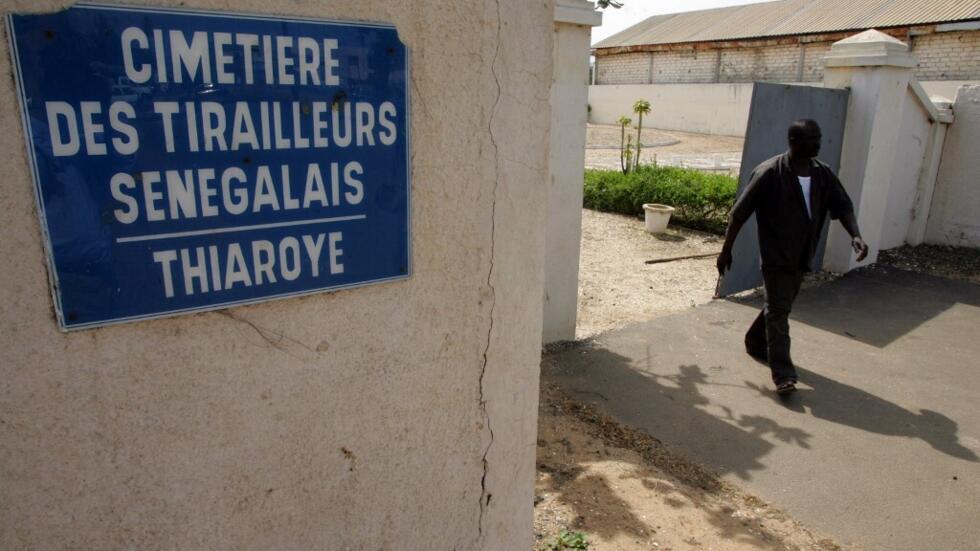
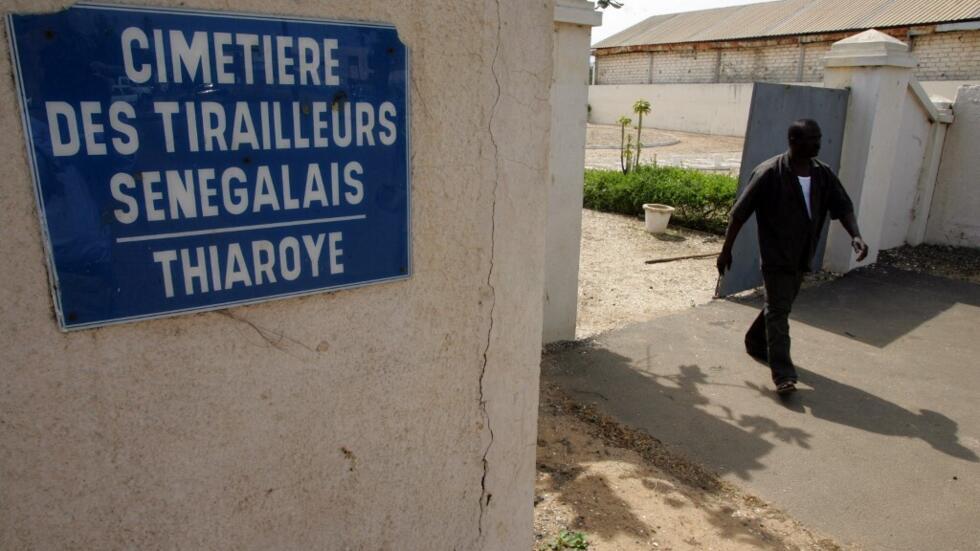
A caretaker cleans graves at the cemetery in Thiaroye where Senegalese soldiers killed by the French military in 1944 are buried. (John Wessels for The Washington Post) Image Source: https://www.washingtonpost.com/world/2020/09/09/senegal-thiaroye-france-deaths/
The 1944 Thiaroye massacre is one of the most horrifying examples of this injustice and is one of the darkest chapters in the history of African colonial soldiers.[vii] Senegalese tirailleurs, who had risked their lives for France, peacefully protested at a military camp in Dakar when they were denied the wages they had rightfully earned. What followed was an act of brutal repression. French forces, determined to crush their dissent, unleashed violence upon these unarmed veterans, murdering dozens in cold blood. Biram Senghor, 82 years old one of the sons of the victims, laments, “These White men threw away Black men like they were nothing.”[viii] Despite their service, many African veterans faced violent repression, as seen in the Thiaroye Massacre, where dozens were killed while demanding fair pay. The massacre is a reminder of the inequality African soldiers faced after the war and how far colonial powers would go to maintain their control.
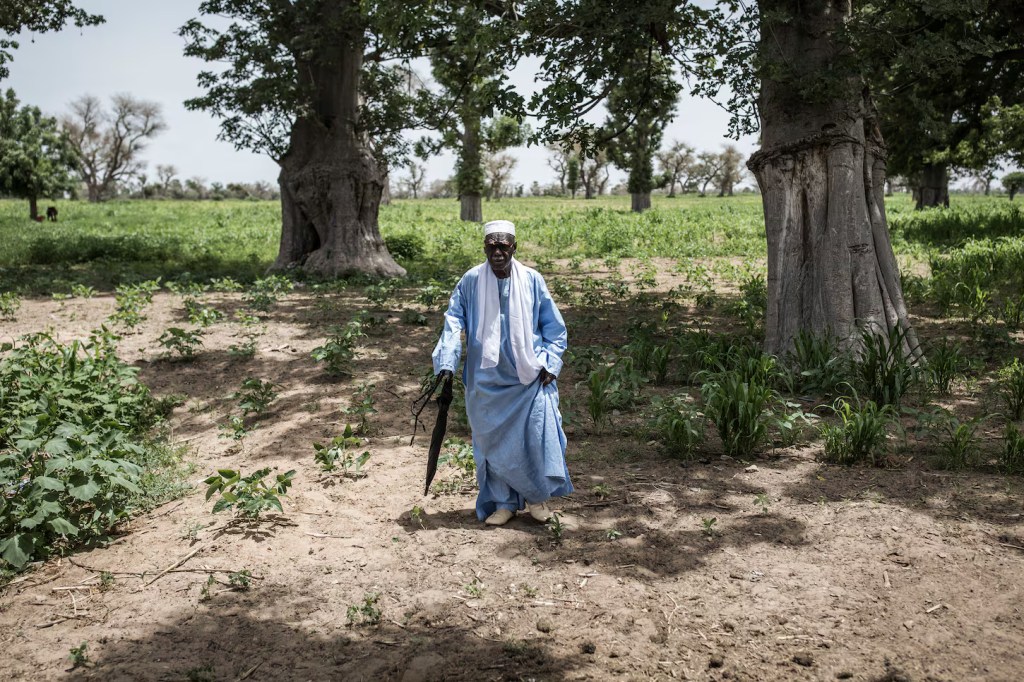
Biram Senghor visits the land in Diakhao, Senegal, where his father lived before going to Europe to fight in World War II. (John Wessels for The Washington Post)Image source: https://www.washingtonpost.com/world/2020/09/09/senegal-thiaroye-france-deaths/
In some cases, West African soldiers from Nigeria, the Gold Coast, Sierra Leone, and Gambia endured humiliating delays upon their return home. While British officials claimed “shipping difficulties” were the cause, a deeper analysis reveals that political and strategic motives were the root cause of the delays. African troops were treated as expendable and given lower priority than their British and Commonwealth counterparts. Instead of honoring their sacrifices, the British military forced them to remain abroad for post-war tasks such as clearing debris and occupying territories in Asia and the Middle East. These soldiers, praised by Japanese forces as “the best jungle fighters” during the Burma campaign, were denied a timely return home. These delays and their treatment reflected the systemic racial discrimination they faced.[ix]
The delayed return of African troops was also partly due to political fears. Britain worried that thousands of trained, frustrated ex-soldiers returning to West Africa’s tense, nationalist atmosphere could spark unrest. To avoid this, the government aimed to slow their return while tightening control over colonies and adjusting its decolonization plans. Colonial governors feared these veterans could intensify anti-colonial movements and destabilize British rule.[x] Beyond political concerns, African soldiers’ contributions were ignored both economically and historically, deepening post-war frustrations that contributed to independence movements.
71 Killingray and Plaut, Fighting for Britain, 73.
72 Losh, “The Forgotten Heroes.”
73 Losh, “The Forgotten Heroes.”
74 Antonio Cascais and Theresa Krinninger, “Africa’s Forgotten World War II Veterans,” Deutsche Welle, May 7, 2020.
75 Olusanya, “The Role of Ex-Servicemen,” 227–228.
76 Ruth Ginio, The French Army and Its African Soldiers: The Years of Decolonization (Lincoln: University of Nebraska Press, 2017), 28–29.
77 Mourre, “The Thiaroye Massacre.”
78 Danielle Paquette, “A Family’s 76-Year Quest for Truth — and Justice,” Washington Post, September 9, 2020.
79 Emmanuel Nwafor Mordi, “‘No Longer Required for Operations’: Troops’ Repatriation to West Africa After the Second World War, 1945–1950,” The Journal of Imperial and Commonwealth History 48, no. 6 (2020): 1049, 1050, 1064.
 WORLD WAR II'S UNSUNG AFRICAN HEROES
Leave a comment